


Owning a piano with ivory keys means maintaining a delicate, historical material that requires specific care. Ivory keys, made from thin veneers of dental bone, are porous, prone to yellowing, and can absorb dirt and oils. Cleaning and preserving them involves gentle techniques and tools to avoid damage.
Key Care Tips:
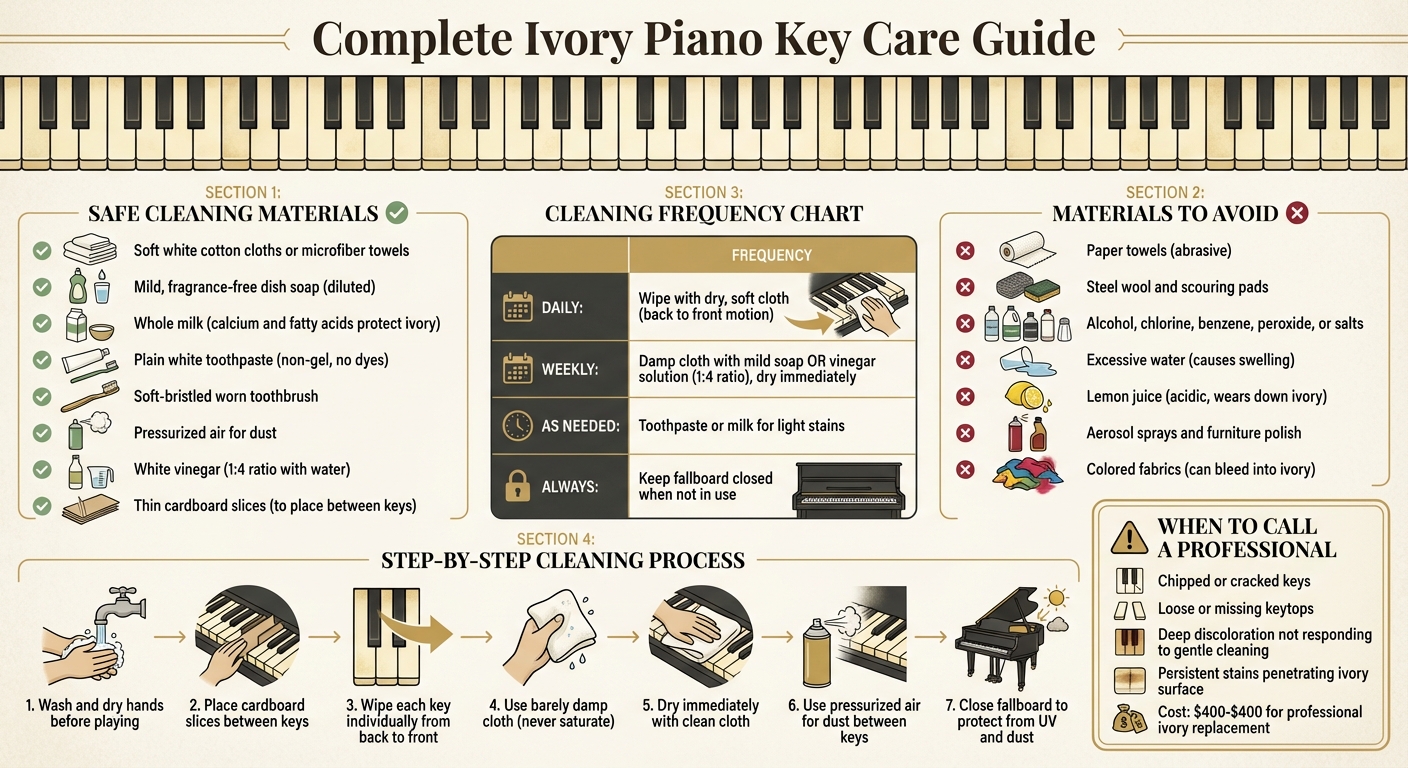
- Daily Cleaning: Wipe keys with a dry, soft cloth to remove dust and oils.
- Weekly Cleaning: Use a damp cloth with mild soap or diluted vinegar (1:4 ratio). Always dry immediately.
- Avoid Damage: Never use harsh chemicals, abrasive tools, or excessive water. Avoid direct sunlight and high humidity.
- Stain Removal: Use white toothpaste or milk for light stains. For deeper discoloration, consult a professional.
If your keys are chipped, cracked, or heavily stained, professional restoration is recommended to preserve their integrity and value. Ivory is no longer produced, making proper maintenance essential for these vintage instruments.
Ivory Piano Key Care and Cleaning Guide
What You Need to Know About Ivory Piano Keys
The Natural Properties of Ivory
Ivory, a natural material derived from dental bone, has a distinct cellular structure that sets it apart from modern plastic alternatives. One of its most recognizable features is the presence of unique Schreger lines, which are as distinctive as fingerprints [2][3].
A standout characteristic of ivory is its porous nature. This porosity allows it to absorb moisture from fingers, providing performers with enhanced grip. However, it also makes ivory susceptible to absorbing dirt and oils, which can penetrate deep into the material over time [1].
Traditionally, ivory keytops were crafted in two separate pieces: a wider front section, known as the head, and a narrower back section, called the tail. This design left a visible seam between the two parts [2][3][4]. In contrast, modern plastic keys are typically molded as a single, seamless piece.
These unique properties of ivory, while beneficial in some ways, also present specific challenges when it comes to cleaning and maintenance.
Problems That Affect Ivory Keys
The very porosity that provides a better grip on ivory keys also makes them harder to maintain. Professional concert pianist Joshua Ross explains:
Ivory keys are very porous so that means that the stains are going to be deeper into the keys which will make it more difficult to remove the stains
With time, ivory naturally yellows, a process that can be sped up by exposure to dust, aerosols, and humidity fluctuations [7]. As the material ages, it also becomes brittle, making the thin key fronts prone to cracking, chipping, or peeling [1][3].
Moisture can be both a friend and a foe to ivory. While a certain level of humidity helps maintain its stability, excessive water during cleaning can cause swelling, warping, or even detachment from the wooden base. Similarly, using harsh cleaning agents, such as high-concentration alcohol, can dry out the material, leading to warping and structural issues [5]. This delicate balance makes caring for ivory keys far more demanding than maintaining their plastic counterparts.
sbb-itb-b8bc1ab
Cleaning Supplies and Tools You’ll Need
Safe Cleaning Materials
Using the right supplies is key to preserving ivory piano keys. Start with soft, white cotton cloths or microfiber towels. The color white is crucial – colored fabrics can bleed into the ivory’s porous surface, leaving permanent stains [8].
For cleaning solutions, opt for a mild, fragrance-free dish soap diluted in warm water. Only use a small amount of soap to avoid residue. Another option is whole milk, which, thanks to its calcium and fatty acids, helps protect the ivory’s surface [7]. For tougher stains, plain white toothpaste (non-gel, no glitter or dyes) works well as a gentle polishing agent [7][8].
A soft-bristled, worn-out toothbrush is ideal for cleaning the natural grain of the ivory without causing scratches. For removing dust between keys, pressurized air is effective and avoids physical contact. A handy tip: place thin cardboard slices between keys during cleaning to prevent cleaning solutions from seeping into the piano’s internal components [7].
If using white vinegar, always dilute it properly – mix 1 part vinegar with 4 parts warm water to avoid damaging the ivory [8]. When wiping, move from back to front to prevent moisture and dirt from getting trapped between the keys [7][8].
Now that you know what to use, it’s equally important to understand what to avoid.
Materials That Can Damage Ivory
Certain materials can cause irreversible harm to ivory keys. Professional pianist Joshua Ross cautions:
Avoid using abrasive tools like scouring pads or brushes. These types of products can cause abrasions. Abrasions and scratches may force you to have to replace piano keys [2]
Paper towels, despite their soft appearance, can be abrasive and damage polished ivory. Likewise, steel wool and scouring pads leave deep scratches. Stay away from cleaners containing alcohol, chlorine, benzene, peroxide, or salts, as these can discolor and crack the ivory [8].
Never saturate the keys with water. Cleaning experts warn, "Ivory piano keys should not be drenched in water as this can damage the ivory and cause the keys to swell, making them harder to play properly" [7]. Even seemingly safe substances like lemon juice should be used sparingly. As Joshua Ross explains:
Lemon juice contains acid and can wear down ivory over time because ivory is basically dental bone [2]
Avoid aerosol sprays, furniture polishes, and air fresheners, as they settle on the keys and speed up yellowing [8]. Always apply cleaning solutions to the cloth first – never spray directly onto the keys.
Regular Cleaning and Maintenance
Daily Dusting
After each session, gently dust your ivory keys with a clean, dry cloth to avoid the buildup of dust and skin oils. The porous surface of the keys can easily trap particles, so it’s important to wipe from back to front – starting at the top near the piano and moving toward you. Avoid wiping side-to-side, as this can push dust and moisture into the narrow spaces between keys, which might lead to swelling or sticking. If dust has settled in hard-to-reach areas, expert Bridgett Price suggests:
For an easy way to dust your piano keys, spray between them with a can of pressurized air [7].
To further reduce buildup, wash and dry your hands thoroughly before playing. This simple step helps keep oils and dirt from transferring to the keys [7].
Weekly Cleaning
Set aside time each week to give your keys a more thorough cleaning. Use a barely damp cloth with a drop of mild, fragrance-free soap to remove fingerprints and grime. Be cautious with moisture – too much can harm the porous ivory, causing it to swell, warp, or crack. Wipe each key individually, following the same back-to-front motion, and immediately dry with a clean cloth.
For a deeper clean, mix a solution of 1 part white vinegar to 4 parts warm water. Clean the black keys separately from the white ones to avoid transferring dark residue. This extra care ensures your piano keys stay clean without compromising their integrity [7].
Protecting Keys with a Cover
When the piano isn’t in use, keeping the keys covered is essential. Closing the fallboard – the folding cover over the keys – provides a simple yet effective way to shield them. Piano maintenance expert Lee Johnson emphasizes:
Your first line of defence is your piano’s fall board. That’s the folding cover that completely covers all the keys. Keep this closed whenever you’re not playing. It will keep the keys from exposure to sunlight (UV), minimize the accumulation of dust, and also the chance something will land on the thin key tops and damage them. [1]
If your piano doesn’t have a functional fallboard, a dedicated cloth key cover works just as well. This protects the keys from UV rays, dust, and accidental damage. Always wipe the keys with a dry cloth before closing the cover to ensure no oils or debris are trapped underneath [7].
How to Remove Stains and Yellowing
Safe Whitening Methods
Over time, ivory keys can develop a yellow tint due to oils and dirt. One gentle cleaning method involves using plain white toothpaste. Apply a small, pea-sized amount to a damp cloth, rub it gently along the keys from back to front, and let it sit for 30–60 seconds. Afterward, wipe the keys clean with a cloth dampened with either milk or water. The mild abrasives in toothpaste help lift surface stains without damaging the delicate grain of the ivory [7][2].
Another effective approach is using milk. Milk not only cleans but also provides a protective layer for the ivory. As wikiHow explains:
Ivory is a type of dental bone so the fatty acids and calcium in the milk will clean and protect the ivory [7].
To use this method, apply a small amount of milk to a soft cloth, gently wipe each key individually, and immediately dry them with a clean cloth [6][2].
You can also expose the keys to natural sunlight to help reduce yellowing. Leave the fallboard open in a bright room, but make sure to cover any adjacent wood with a heavy cloth to prevent damage. Keep an eye on the exposure to avoid overheating the keys [10][1].
If these gentle methods don’t fully remove the discoloration, consider moving on to techniques designed for more stubborn stains.
Dealing with Stubborn Stains
For tougher stains, a white vinyl eraser can be surprisingly effective. Gently rub the eraser over the stained area, always stroking away from the piano to prevent eraser crumbs from falling between the keys. This technique works well for removing fingerprints and light grime embedded in the ivory grain [9][10].
If the stains are deeper, you might need to use #0000 super-fine steel wool. Lightly wipe the affected areas to remove a thin layer of the yellowed material. Use this method sparingly to avoid scratching the surface [9][10]. For severe discoloration, an ivory scraper can be used to remove the oxidized top layer. Since this tool requires expertise, it’s best to consult a piano technician to avoid causing permanent damage to the keys [7][6][2].
Caring for Antique and Delicate Ivory Keys
How to Preserve Antique Keys
Antique ivory demands extra care due to its tendency to become brittle with age. The thin front edges of these keys are especially prone to cracking and chipping, making gentle handling crucial [1][4].
Start with the gentlest cleaning method: a lightly dampened microfiber cloth. Clean each key individually, moving from back to front rather than side to side. This approach helps protect the fragile edges. To avoid moisture seeping into the wooden keybed, place thin pieces of cardboard between the keys during cleaning [7].
Environmental protection is equally important. Keep the fallboard closed when the piano isn’t in use to shield the keys from UV light, direct sunlight, and high humidity. These factors can speed up yellowing and deterioration, especially for antique ivory [1][7]. If an ivory keytop becomes loose, resist the urge to use standard water-based wood glue, as it can cause the ivory to curl. Instead, leave this to a professional who can apply the correct adhesive [1].
For anything beyond routine care, it’s best to involve an expert.
When to Call a Professional
The fragile nature of antique ivory means some issues are better left to professionals. For instance, loose or missing keytops should never be reattached with improper adhesives, as this can lead to irreversible damage. Contact a piano technician immediately if you notice such problems [1]. Similarly, persistent cracks, chips, or discoloration that don’t respond to gentle cleaning require professional attention. Technicians often use specialized materials like AcryliKey, a dental-style epoxy, to repair damage. Afterward, they sand and buff the keys to restore their original texture [4].
Concert pianist Joshua Ross emphasizes the importance of caution:
I would contact my piano technician prior to using [an ivory scraper]. Having annoying yellow stains is one thing but destroying your keys will be way more costly if you happen to misuse this tool. [2]
For deep stains that have penetrated the porous ivory, professionals may employ specific scrapers or bleaching agents. If there’s any doubt about the structural integrity of the keys, it’s crucial to seek expert help [1][2].
Professional Piano Maintenance Services
Why Professional Services Matter
When it comes to pianos, especially those with historical or sentimental value, professional care is essential. Trained piano technicians bring the expertise needed to protect your investment and avoid costly mistakes. Ivory, for instance, is incredibly delicate – using the wrong adhesive or scraping tool can cause irreversible damage to keys that have lasted decades. Attempting repairs without the right knowledge can lead to the destruction of components that are impossible to replace.
Professionals have access to vintage ivory key tops, allowing them to match the original color, thickness, and grain with precision. They also use adhesives specifically formulated for ivory, ensuring the material stays intact without curling. For stubborn stains that penetrate the porous ivory surface, advanced treatments like commercial-grade hydrogen peroxide paired with UV light are employed. Additionally, working on complex piano models, such as spinets and grand pianos, requires meticulous disassembly to protect delicate mechanisms and cabinetry. The cost of professional ivory replacement typically ranges from $400 to $600 [4], making it a safer and more reliable option than DIY attempts.
This level of care reflects the dedication of industry professionals committed to preserving these timeless instruments.
Cooper Piano‘s Services

Preserving historic ivory keys requires both skill and attention to detail, and Cooper Piano has been a trusted name in piano care for over a century. Their services include expert tuning, repair, restoration, and specialized ivory key maintenance. Whether it’s routine cleaning or addressing more intricate issues like chipped ivory or deep discoloration, their technicians bring years of experience to every project.
If your piano has yellowed keys, loose key tops, or missing pieces, Cooper Piano can help. Their team sources matching materials and provides the careful restoration antique instruments demand. Beyond key care, they offer full piano restoration, appraisals, and even professional moving services. To learn more or schedule a consultation, visit cooperpiano.com and connect with their skilled technicians.
Cleaning Ivory Piano Keys
Conclusion
Taking care of your piano keys – like washing your hands before playing, gently wiping keys with a soft cloth, and keeping the fallboard closed – helps prevent oils, dust, and UV exposure from speeding up yellowing or causing damage.
Since ivory is porous, stick to a slightly damp microfiber cloth with mild soap for cleaning, and always wipe from back to front. This prevents moisture from seeping between the keys. Avoid using harsh chemicals, aerosols, or abrasive tools, as they can cause cracks or permanent damage to the surface.
"Cleaning your ivory keys offers many benefits from the cosmetics, preventing chipping, cracking and more." – Joshua Ross, Professional Concert Pianist [2]
If you encounter chipped keys, stubborn stains, or loose ivory key tops, don’t attempt DIY fixes. Instead, reach out to a professional. Ivory is no longer used in modern piano manufacturing, so preserving the original key tops is crucial for maintaining both the historical character and market value of your piano.
FAQs
How can I tell if my keys are real ivory?
To spot genuine ivory keys, check for a fine grain pattern or a visible line on the surface. They often show slight translucency and may develop a yellowish tint as they age. Additionally, ivory keys usually have a finish that’s less matte and slightly glossy, particularly noticeable on the black keys.
What humidity level is best for ivory keys?
The ideal humidity level for ivory piano keys falls between 40% and 50% relative humidity. Keeping humidity within this range is crucial to avoid issues like cracking, discoloration, or other forms of damage caused by either too much dryness or excess moisture. To ensure proper maintenance, use a hygrometer to regularly check humidity levels. If necessary, invest in a humidifier or dehumidifier to maintain a stable environment for your piano.
When should I call a professional for ivory key damage?
If your ivory piano keys are cracked, chipped, loose, or showing signs of brittleness or discoloration, it’s time to reach out to a professional. Attempting repairs yourself could worsen the damage or decrease the piano’s value. Experts have the skills to handle these delicate materials, ensuring your piano’s condition and value are preserved.