


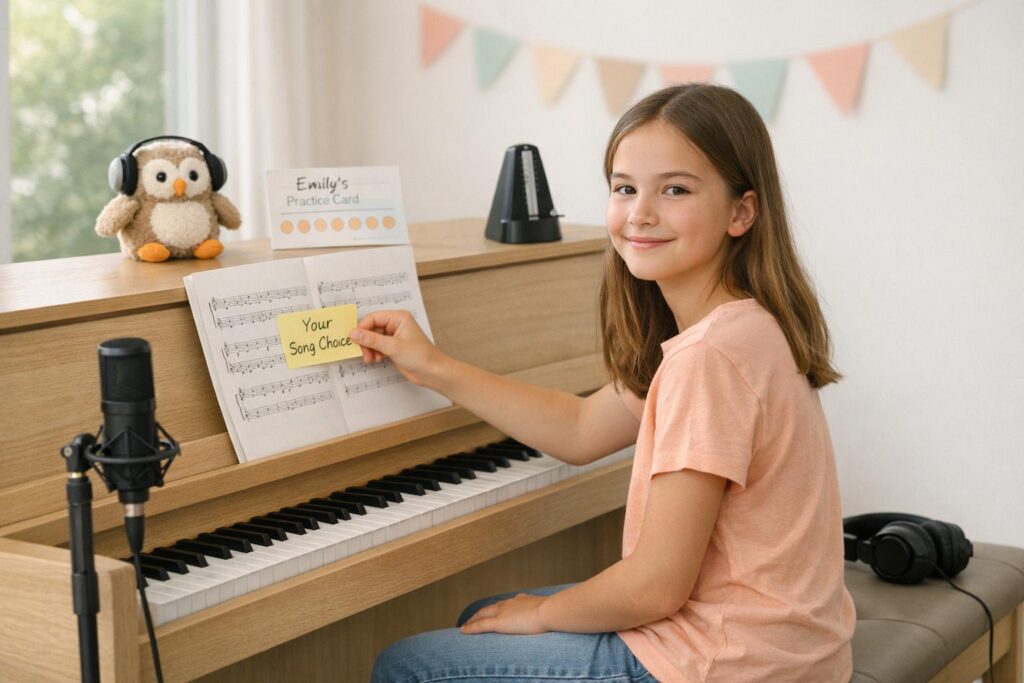

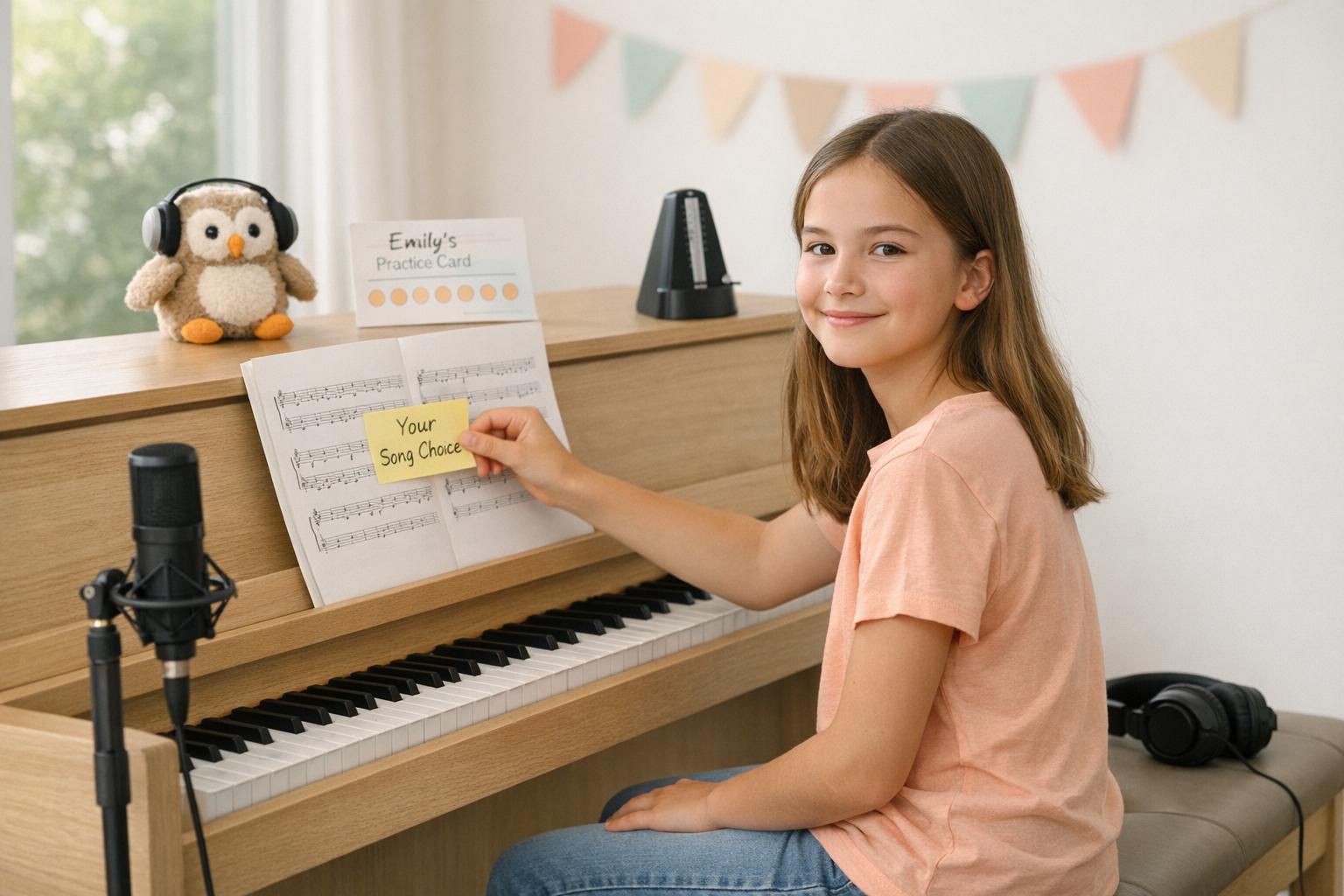

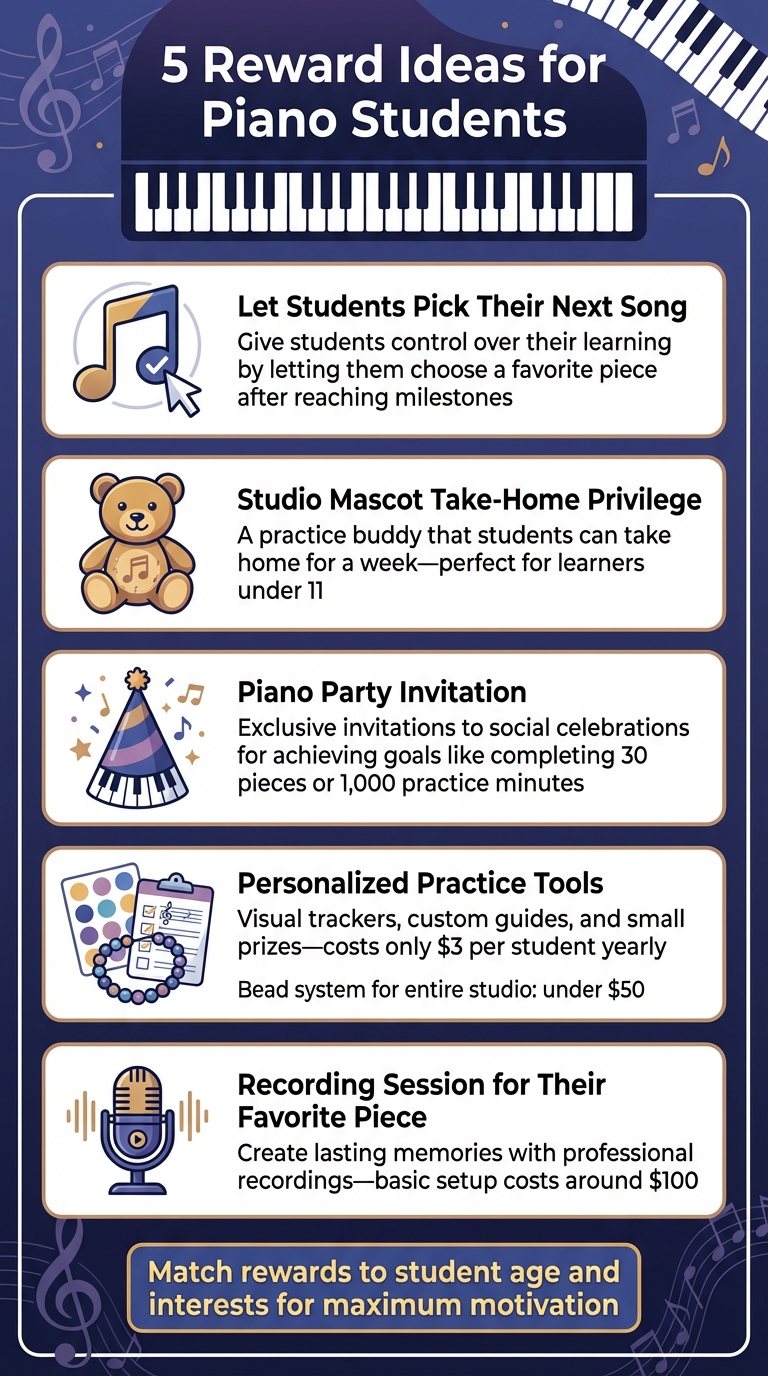
Encouraging your kids to practice piano can be challenging, but rewards make it easier. The right incentives encourage consistent practice, build confidence, and make learning fun. Here are five ideas to keep students engaged:
- Let Students Pick Their Next Song: Reward progress by letting them choose a favorite piece to learn.
- Studio Mascot Take-Home Privilege: A stuffed toy mascot adds a fun, personal touch to practice.
- Piano Party Invitation: Celebrate milestones with a social event filled with games and performances.
- Personalized Practice Tools: Use visual trackers, custom guides, or small prizes to make practice sessions enjoyable.
- Recording Session for Their Favorite Piece: Create lasting memories by recording and sharing their polished pieces.
Each option motivates students differently, so choose rewards that align with their interests and age. Whether it’s a small token or a special event, these ideas help transform practice into progress.


5 Effective Reward Ideas for Piano Students
How to Gamify Piano Practice in Your Piano Studio

sbb-itb-b8bc1ab
1. Let Students Pick Their Next Song
One of the easiest ways to motivate students during piano lessons is by letting them choose the next song they want to learn. This approach transforms practice into a more personal and meaningful experience. Most students already have a song in mind – something they’ve heard on the radio, seen a friend perform, or stumbled upon themselves [1]. When they know they’re working toward a song they truly care about, practice stops feeling like a chore and starts feeling like progress toward something exciting.
Using a favorite song as a reward can be a game-changer. Set clear milestones – like finishing a method book, mastering a specific skill, or completing a set number of pages – and grant the reward song once the goal is achieved [1][2]. As Teach Piano Today explains:
"Working towards a beloved piece is an exciting way to encourage practice and skills acquisition" [1].
This method shifts the focus away from external rewards like stickers or candy and turns the music itself into the prize. It also gives students more control over their learning, which can be motivating in its own right [1]. Some teachers even use a "dessert" system, where the student’s chosen piece is included in their assignments but can only be played after completing their core repertoire [2].
To make this reward both enjoyable and educational, help students pick songs that suit their current skill level. If their chosen piece is too challenging, suggest a simplified version that aligns with their abilities [2]. You can also use a scoring system – like requiring a 9 out of 10 on their current piece – to determine when they’re ready to move on to their reward song [4].
2. Studio Mascot Take-Home Privilege
Introduce a studio mascot – a stuffed toy that students can take home for a week – as a fun, hands-on reward for young learners. Acting as a "practice buddy", the mascot helps make practice time feel less lonely and more enjoyable. This lighthearted incentive is especially appealing to students under 11, who tend to love the novelty of having a special companion at home.
To make the mascot even more exciting, give it a catchy, music-themed name like "Treblesome Tiger", "Bravo Bobcat", or "Forte Frog." These playful names not only generate enthusiasm but also tie into your studio’s branding. Andrea Dow, co-founder of Teach Piano Today, emphasizes the importance of this approach:
"The bigger deal you make of your mascot, the more excited your students will be when it is their turn to take him home."
You can take this reward a step further by providing a logbook where students can document their daily practice and share stories about their mascot’s adventures. This encourages consistent practice while fostering a sense of community among your students.
For practicality, choose a mascot that’s machine-washable or easy to sanitize. Start by offering this privilege to students who have shown they can handle responsibility, setting a positive example for others. To build even more excitement, announce the mascot’s weekly "caretaker" in newsletters or on social media. This not only adds a sense of prestige but also keeps everyone looking forward to their turn.
3. Piano Party Invitation
A piano party transforms practice milestones into a lively and social celebration. Instead of ordinary rewards, offer exclusive invitations to these parties as a prize for reaching specific goals – like completing a 30-piece challenge or logging 1,000 minutes of practice. This approach makes the event feel special and earned, rather than just another studio gathering.
At Cooper Piano, we embrace this idea by turning musical achievements into shared celebrations.
The party itself should be a mix of fun and recognition. Start with activities that help everyone feel at ease, like an icebreaker game. For example, try "Music This or That", where students move to different sides of the room based on their preferences (e.g., "Would you rather play classical or jazz?"). This gets everyone moving and comfortable while setting a playful tone. Add in some theory-based games to keep the energy up and minds engaged [6].
For performances, create a relaxed and supportive atmosphere. Arrange students in a circle around the piano instead of a formal recital setup. Kevin L Wafford from Music N 44 Soul explains:
"The party really does break the tension of performing not only in front of the other students but it also build confidence for their recital in front of family and friends" [7].
To keep things exciting, mix students of different skill levels in the performance lineup. You can also let students vote on fun categories like "Best Dynamics" or "Most Expressive Performance", adding an interactive element to the event [7].
Keep refreshments simple. You could host a potluck where families contribute snacks or set up a decorate-your-own-cookie station for a creative twist. Wendy Stevens from ComposeCreate advises:
"It is so much better to have a simple party where you can have a great time with them than to have an elaborate one that leaves you feeling drained and grumpy" [6].
This kind of celebration not only rewards hard work but also builds a sense of community among students and families. Much like personalized rewards, a piano party highlights progress in a way that’s both fun and meaningful.
4. Personalized Practice Tools
Personalized practice tools take the idea of rewarding effort and weave it directly into the learning process. These tools make practice sessions more engaging by turning routine tasks into opportunities for achievement and recognition.
One simple yet effective idea is having students create their own practice guides. For instance, they can jot down reminders like "clap and count measures 5–8" on sticky notes. This small act fosters a sense of ownership over their learning. As Barbara Kreader Skalinder, a piano educator and author, pointed out:
"Only when he actually wrote out the word himself did the suggestion finally sink in" [8].
This hands-on involvement helps students internalize the instructions more effectively.
Visual progress trackers, such as beads, punch cards, or themed charts, are another great option. These tools provide tangible evidence of progress, which can be highly motivating. For example, you can set up a bead incentive system for an entire studio for under $50 [1]. Students can earn beads for milestones like practicing five days in a row or memorizing a piece, then use them to create necklaces or keychains.
When it comes to rewards, tailoring them to the student’s age and interests makes a big difference. Younger students might enjoy colorful clothespins, sparkly pencils, or fun Japanese puzzle erasers. Older students, on the other hand, might prefer practical items like high-quality highlighters or small gift cards. Advanced students could even be motivated by more professional tools, such as recording equipment.
The cost of implementing a weekly incentive system using these personalized tools is surprisingly low – just about $3.00 per student for an entire year [9]. At Cooper Piano, these practice tools help turn what might feel like a chore into something students genuinely look forward to. By combining these tools with other creative reward strategies, you can strengthen students’ dedication to practice while making the process more enjoyable.
5. Recording Session for Their Favorite Piece
A recording session transforms temporary practice into a lasting memory. When students know they’re creating something permanent, they tend to focus on perfecting every detail. It’s not just about playing the right notes – it’s about capturing a moment they’ll treasure and reflect on with pride.
Take, for example, a project by Teach Piano Today. In June 2017, Andrea Dow introduced "aural yearbooks", where students chose up to four tracks to polish over a month of focused practice. To make it even more special, a mini photo session was included to create custom CD covers using tools like Canva. While recording sessions do require extra effort, they offer a strong motivational boost. Dow highlighted the impact:
"Recording CDs takes a bit of extra planning and time, however it’s TOTALLY worth it! Your students will be motivated to practice, proud of their end results, and excited to return for another year of piano lessons." [12]
Listening to recordings also helps students hear their performance from a different perspective. Piano teacher Joy Morin explains:
"The student becomes the listener. When listening to the playback, the student is given the opportunity to hear what the piece sounds like from an audience member’s perspective." [10]
This change in perspective encourages self-assessment. For instance, in April 2010, Morin recorded her student Jean performing Borodin’s "Polovetsian Dance" using a digital recorder and iMovie. By listening to the playback, Jean identified specific areas to improve and addressed most of them in just one follow-up session [11].
The good news? You don’t need fancy equipment. A simple setup, like a Tascam DR-05 digital recorder (around $100) paired with free software like Audacity, works perfectly for high-quality recordings [13]. Once recorded, tracks can be shared via private YouTube links or SoundCloud, complete with custom album art as thumbnails. At Cooper Piano, these recordings become cherished keepsakes – serving as both progress reports and meaningful rewards.
Recording sessions, much like other creative incentives, celebrate growth in a way that lasts far beyond the moment.
Conclusion
Rewards tailored to a student’s age and interests can make all the difference. A five-year-old might beam with pride over a sticker chart, while a teenager might treasure the chance to record a favorite piece or pick next week’s repertoire. As piano teacher and author Julie Knerr explains:
"Just as adults generally work harder at their jobs when they receive a paycheck, I believe that rewarding children for their work at the piano will encourage them to keep working over the long term" [14].
The real trick lies in matching the reward to what truly excites each student.
Research shows that setting clear, specific goals helps students develop self-regulation skills [3]. When students track their progress – whether through a short-term practice challenge or a year-long milestone – they build habits that nurture internal motivation. Melody Payne, PhD, observes:
"As students go through the challenge, the learning process itself becomes the primary reward, and the prizes shift to secondary" [5].
These insights offer practical strategies for keeping students motivated. Teachers and parents should collaborate to discover what drives each child. For instance, does the student light up at the thought of earning small tangible rewards, or do they prefer experiential incentives like "Teacher for a Day", which cost nothing but create lasting memories? When home and studio efforts align, rewards become meaningful markers of progress.
Of course, rewards are most effective when paired with quality tools and instruction. A well-crafted instrument makes practice more enjoyable, while professional lessons provide the structure needed for growth. At Cooper Piano, our century-long dedication ensures students have access to both – laying the foundation for rewards to reflect genuine progress, not just surface-level achievements. With the right support, rewards celebrate hard-earned milestones and inspire further growth.
FAQs
How often should I give piano practice rewards?
Giving rewards for piano practice on a regular basis can be a great way to keep students motivated while encouraging consistent habits. Many teachers find that offering rewards weekly or every two weeks works well. Systems like sticker charts or point-based incentives make the process fun and engaging.
Here’s how it might work: students earn a sticker or a set number of points for each practice session they complete. Once they reach a specific goal – like a certain number of stickers or points – they can trade them in for a prize. This could be anything from small toys to gift cards, depending on what excites your students.
The key is to adjust the reward system to align with your teaching goals and what works best for your students. A little creativity and flexibility can go a long way in building enthusiasm for practice!
What rewards work best for teens vs. young kids?
Rewards often depend on age and personal interests. For younger children, tangible rewards like stickers, small toys, or prize boxes can make practice feel like a fun activity rather than a chore. These little incentives keep them engaged and excited.
For teens, motivation tends to shift toward goal-oriented rewards. Things like recording their performances, earning badges, or gaining small privileges can make a big difference. Pairing this with recognition of their progress and introducing them to engaging, challenging music can help them stay inspired and build a sense of accomplishment.
How do I keep rewards from replacing intrinsic motivation?
Focusing on nurturing a genuine love for playing the piano is key to keeping intrinsic motivation alive. Use rewards thoughtfully and combine them with encouragement that promotes independence and personal development. Celebrate milestones by highlighting the joy of improvement and the satisfaction of mastering skills, rather than relying on external prizes. While short-term incentives can be helpful in supporting skill-building and fostering a sense of achievement, avoid leaning on them too much to preserve authentic enthusiasm for learning.